
If you’re weighing a mountain property right now, you've probably noticed the headlines pointing in different directions. Prices are softening, according to one report. Demand is surging, says another. As a result, you might be wondering: Is this the right time, or am I better off waiting? This brief is built for that kind of scrutiny.
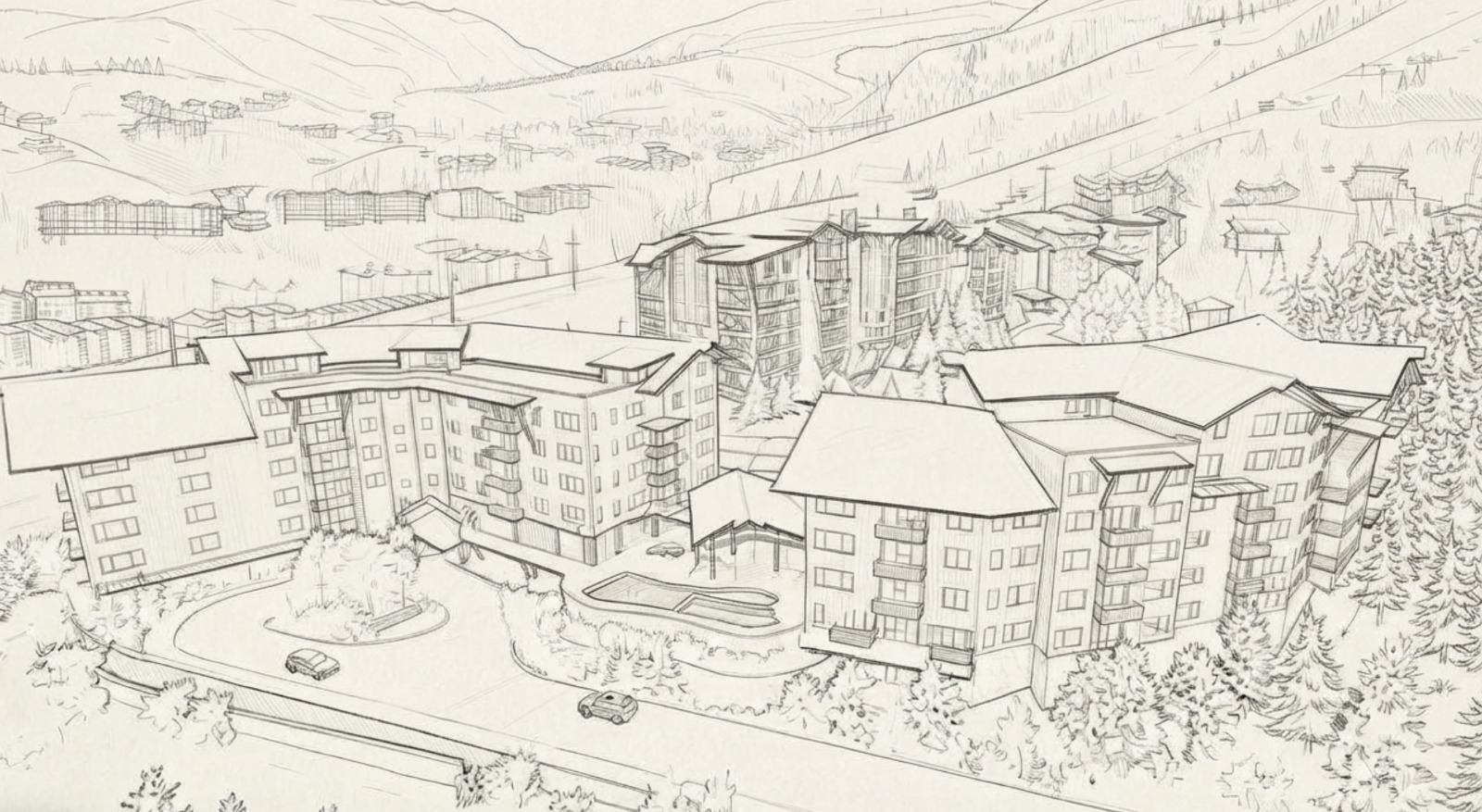
Rather than sell you on a feeling, it lays out what the most recent local brokerage figures reveal about Steamboat Springs luxury real estate investment in 2026: how prices are genuinely behaving once you account for what's actually selling, just how scarce premium ski-in/ski-out inventory has become, why elevated interest rates haven't slowed demand, and how the wave of committed development capital is likely to shape values from here.
Read together, the numbers point to something the headlines miss: a clear, time-sensitive window for the disciplined early-entry investor. And underneath the figures is the part no spreadsheet captures: this is still Steamboat, a place people buy into for the life it offers, not just the return. Let's walk through what the data actually says.
Steamboat Springs: A Market That Matured, Not Softened
The headline numbers in any resort market can mislead, and Steamboat is no exception. When more attainable homes trade (for example, Routt County saw six sales under $1 million in one recent quarter versus just two the year prior), the median gets pulled down even as individual properties hold or gain value. That's why a falling median isn't always a sign of a falling market, but a broadening one.
Look past the mix, and the high end tells a cleaner story. Adjusting for outlier sales, comparable luxury homes were up around 12% in recent reporting, and the market logged a record price per square foot of roughly $1,403.
Zoom out further, and the case strengthens. Steamboat property has appreciated an average of 7.24% annually over the past 30 years, rising to 9.55% annually over the last decade. This is not a boom-bust resort gamble. It's one of the more durable appreciation curves in mountain real estate.
Two structural facts reinforce that durability:
- More than half of all purchases over the last ten years have been cash. This is a market of deliberate buyers, not leveraged speculators who exit when conditions shift.
- Local brokers describe a clear shift from a pandemic-driven "escape market" back to a "healthy lifestyle market" that is rooted in buyers who want to be in Steamboat year-round, not just fleeing something else. That's a steadier foundation for long-term value than transient demand ever produces.
The market has matured. That's not a warning; for a disciplined buyer, it's the signal.
The Scarcity That Defines The Opportunity
Inventory in Steamboat has risen meaningfully off pandemic lows, and that's the part of the story most buyers hear. What they miss is the other half: the inventory that's risen is not the inventory that matters most to a serious investor.
Across the broader Routt County market, active listings have climbed from the historic lows of 250 to 275 residences seen in recent years toward a more normal range. That movement has created genuine buyer leverage in the detached single-family and mid-market segments, meaning more time, more negotiating room, more options than buyers have had in years.
The mountain segment tells a different story. As of Q1 2026, there were roughly 90 one- and two-bedroom condos available on the mountain, and just 13 single-family homes. Thirteen. For a buyer focused on true ski-in/ski-out access, legacy ownership, and short-term rental eligibility, the field is not wide. It never has been, and the structural constraints on Steamboat's buildable land mean it won't get meaningfully wider.
This is the segment The Astrid enters. True ski-in/ski-out positioning on Mount Werner, within one of the last developable parcels at the base, year-round amenities, managed ownership and multigenerational use. Phase 1 residences are available now. And with only two of the four remaining, the selection window is a real constraint.
For the early-entry investor, scarcity in the right segment is the whole thesis. A market with rising broad inventory but vanishingly thin premium supply doesn't split the difference, but instead concentrates value at the top. The buyers who understand that distinction are the ones who enter on the best terms.
For a deeper look at why ultra-high-net-worth buyers are specifically choosing The Astrid within this market, be sure to read this thorough breakdown.
The Capital Already Committed to Steamboat's Next Chapter
Market fundamentals explain where values have been. What's being built right now explains where they're going. Steamboat is in the middle of one of the largest investment cycles in its history. And unlike speculative development, this is capital already committed and construction already underway.
The centerpiece is the resort's Full Steam Ahead transformation, a multi-hundred-million-dollar overhaul of the base area and on-mountain experience. The headline project is the Wild Blue Gondola, which lifts out-of-base capacity from 6,000 to 10,000 people per hour. That's not an amenity upgrade. It's a fundamental shift in how many people the mountain can absorb, and how quickly.
On top of that, the Yampa Valley Airport is expanding, and many renowned brands are confirmed to start building in the area.
What this level of institutional investment signals to a real estate buyer is straightforward: the people who underwrite large-scale development for a living have looked at Steamboat and decided it's worth hundreds of millions of dollars of committed capital.
What does this mean for you? That new supply will not make opportunities here more financially attainable. As resort real estate becomes more expensive to build, it pulls the entire market upward, including the existing inventory sitting beside it. For a buyer entering now, that dynamic works in one direction only.
Why Steamboat Real Estate Holds Its Value Season After Season
Most resort markets run on a single season. When the snow is good, demand spikes. When it isn't, it retreats. Steamboat doesn't follow that pattern, and understanding why is central to underwriting it as a long-term hold rather than a weather-dependent bet.
Several structural factors explain its durability:
- World-class skiing with a trademark to prove it: Steamboat sits on more than 3,700 acres of skiable terrain, served by Champagne Powder® snow that's so consistently dry and light that it earned a trademark. The resort has been named the top overall ski destination in North America, and its reputation among serious skiers is decades deep.
- A genuine four-season destination: Countless hiking trails, world-class mountain biking, fly-fishing on the Yampa River, natural hot springs, and a packed calendar of year-round events mean you aren't just buying a winter cabin. You're buying into a lifestyle that justifies the asset twelve months of the year.
- A rental market that performs year-round: Short-term-rental-eligible properties, particularly those with true mountain access, carry strong occupancy across both ski season and summer, which matters considerably when underwriting carrying costs against actual usage.
- Authentic character that sustains demand across cycles: Unlike Aspen or Vail, where the luxury market long ago displaced the town's original identity, Steamboat has held onto its Western, ranching-town roots. That authenticity is what sustains demand across economic cycles, not just peak ones.
- Strong lifestyle migration from major metros: Buyers from Denver, Dallas, Houston, and coastal cities continue to move spend — and in many cases, primary residences — toward Steamboat, drawn by the combination of mountain access, community character, and relative value compared to more established resort markets.
Tips on How to Buy Smart in This Market
The data makes a case for Steamboat. How you enter determines whether you capture the upside it points to. A few principles worth carrying into any serious conversation about a purchase here:
- Prioritize asset type over address: Not all Steamboat real estate is equally positioned for the next cycle. The segments with the strongest appreciation thesis (new construction, true slopeside access, large-format residences with STR potential) are also the thinnest. An older condo with a good view and a Steamboat zip code is a different investment from a purpose-built, managed mountain residence with direct ski access.
- Underwrite the developer, not just the development: In pre-construction, the building doesn't exist yet, but the team does. Track record, local execution capability, and financial backing are the variables you can assess today. They're also the ones that determine whether what's promised gets delivered.
- Factor cash into your positioning: With more than half of all transactions in this market closing in cash over the last decade, financing is not a competitive advantage here. It's a neutral at best. Buyers who can move without rate dependence are better positioned in terms of timeline, negotiating flexibility, and speed to close. If you're financing, price that reality into your offer strategy accordingly.
- Move on milestones, not sentiment: In a pre-construction asset with documented price increases tied to construction progress and inventory release, waiting for certainty comes at a cost. The buyers who enter ahead of those markers lock in a basis the next wave of buyers won't have access to.
The Window is Real, and It Has a Timeline
Steamboat's fundamentals (the appreciation record, the infrastructure investment, the thinning slopeside inventory, the institutional capital arriving from every direction) aren't a secret. What separates the investors who act from those who don't isn't access to better information. It's the discipline to move when the data aligns rather than waiting for a signal.
This Steamboat Springs luxury real estate investment 2026 brief is a starting point.
The next step is to download the Investment Overview detailing Phase 1 at The Astrid, from current availability and residence specifications to the pricing structure and the benefits of securing a property before development progresses.
And if you'd prefer to talk through what ownership at The Astrid looks like within your broader portfolio, don’t hesitate to contact our team for a direct conversation.